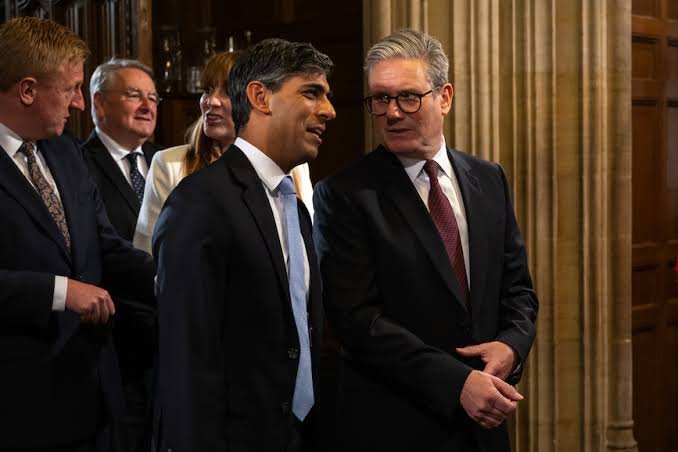
In recent German political debates, the phrase “hart violet braun” has surfaced with increasing frequency. It refers to three distinct parties: the far-right Alternative for Germany (AfD, “hart”), the left-wing Die Linke (“violet”), and the conservative Christian Democratic Union (CDU) with its Bavarian sister party CSU (“braun”). The term is not an official coalition but a shorthand used by commentators to describe potential alignments or shared stances on certain issues.
Common Misconceptions About the Hart Violet Braun Grouping
One major misconception is that “hart violet braun” represents a formal coalition. In reality, no such alliance has ever governed at the federal level. The AfD, founded in 2013, has never been part of a national government. Die Linke, formed in 2007 from the merger of the Party of Democratic Socialism and the Labour and Social Justice Party, has governed in some eastern states but never with the AfD. The CDU, founded in 1945, has led many coalitions but has maintained a strict “firewall” against cooperating with the AfD. However, in 2024, local CDU branches broke this taboo by voting with the AfD on some measures, sparking controversy. Another misconception is that “braun” refers to the brown shirts of the Nazi SA. While historically loaded, in this context it purely denotes the CDU/CSU’s conservative color. Public records covering this story are gathered in Hart Violet Braun: Life Of Yael Cohen Braun's Daughter
Regional and Demographic Reception of the Term
The term “hart violet braun” resonates most strongly in eastern Germany, where the AfD and Die Linke both have significant support. In states like Saxony and Thuringia, voters often shift between these parties, creating a fluid political landscape. Younger demographics, particularly those under 30, are more likely to encounter the term on social media platforms like X (formerly Twitter) and TikTok, where political shorthand thrives. Older voters, especially in western Germany, may find the term confusing or dismiss it as media jargon. The phrase gained traction during the 2023-2024 debates on migration and energy policy, when all three parties took positions that sometimes overlapped—for example, opposing certain EU sanctions or calling for stricter border controls, albeit from different ideological angles.
Comparing Hart Violet Braun with Other Political Groupings
Unlike the “traffic light coalition” (SPD, Greens, FDP) or the “Jamaica coalition” (CDU, Greens, FDP), “hart violet braun” is not a viable governing model. The traffic light coalition, formed in 2021, is a center-left alliance, while Jamaica would be center-right. In contrast, “hart violet braun” spans the far-right, far-left, and center-right, making policy agreement unlikely. A closer parallel is the “grand coalition” of CDU/CSU and SPD, which has governed multiple times. However, that pairing shares a centrist orientation. The term also echoes the “red-red-green” coalition (SPD, Die Linke, Greens) seen in some states, but “hart violet braun” includes the far-right AfD, which other parties refuse to work with. This isolation of the AfD is a key difference: while Die Linke and CDU have cooperated in some state governments, neither will formally ally with the AfD.
Behind the Scenes: How the Term Hart Violet Braun Emerged
The phrase “hart violet braun” likely originated in German political commentary around 2023, as analysts sought a catchy label for the three parties’ occasional convergence on issues like migration and energy. The colors are symbolic: “hart” (hard) for AfD’s tough stance, “violet” for Die Linke’s mix of red (socialism) and blue (protest), and “braun” for CDU/CSU’s traditional conservative hue. Media outlets used it to highlight the paradox of parties that are ideological opposites yet sometimes vote alike. The term gained further traction during the 2024 European Parliament election campaign, when all three parties criticized the EU’s migration pact. Despite its growing use, the term remains informal and is not recognized by the parties themselves. Die Linke has explicitly rejected any association with the AfD, calling it a threat to democracy.
| Party | Color Code | Founded | Ideology |
|---|---|---|---|
| AfD | Hart (hard) | 2013 | Far-right, nationalist |
| Die Linke | Violet | 2007 | Left-wing, socialist |
| CDU/CSU | Braun | 1945 | Center-right, conservative |
Frequently Asked Questions
Why did the term “hart violet braun” become popular in German political discourse?
The term gained popularity because it succinctly captures the unusual convergence of three ideologically opposed parties on certain issues, such as migration and EU policy. It emerged during the 2023-2024 debates, when all three criticized the government’s stance, making the shorthand useful for media and analysts.
Is there any truth to rumors that AfD and CDU are secretly planning a coalition?
While local CDU branches have voted with the AfD on some measures in 2024, the national CDU leadership maintains a strict policy of non-cooperation. Die Linke has also rejected any alliance with the AfD, calling it undemocratic.
What is the meaning of “hart violet braun” in German politics?
It is a descriptive term that groups the AfD (hart), Die Linke (violet), and CDU/CSU (braun) based on their party colors. It does not denote a formal coalition but rather highlights moments when these parties share similar positions, despite their deep ideological differences.
Where did the term “hart violet braun” originate?
The term likely originated in German political commentary and social media around 2023. It was coined by analysts and journalists to label the three parties’ occasional alignment on issues like migration and energy. It is not an official term used by the parties themselves.
What is the impact of the “hart violet braun” grouping on German democracy?
The grouping raises concerns about the erosion of the political “firewall” against the far-right AfD. If CDU continues to cooperate locally, it could normalize the AfD. However, Die Linke’s firm opposition to such cooperation helps maintain democratic boundaries. The term itself reflects a polarized political landscape.